










Thomas A. Berry
President Donald Trump is reportedly considering an executive order that would impose sweeping changes on the 2026 federal elections. According to the Washington Post, the order under consideration could ban mail ballots and certain types of voting machines. The purported justification for these massive changes would be national security; a proponent of the order claims that “there are foreign interests that are interfering in our election processes,” which “causes a national emergency where the president has to be able to deal with it.”
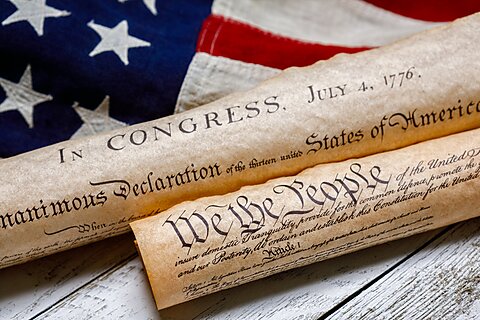
In some areas of the law, the president’s inherent authority to act unilaterally without congressional authorization is murky or disputable. But in the realm of election administration, there is no ambiguity. The Constitution explicitly assigns to “the Congress” the power to “make or alter” election regulations “by Law” (i.e., by statute). That explicit textual command leaves no room for any claim that the president has inherent authority to alter election law by executive order.
The Framers of the Constitution understood the power (and the danger) that came with the control of election procedures. In a democracy, there is always a risk that those in power will change election procedures to make it inconvenient (or impossible) for their opponents to vote. That is why the Framers chose Congress, which represented the diverse national constituency, as the ultimate backstop against the potential for biased election administration.
Alexander Hamilton explained the Framers’ design of the Elections Clause in The Federalist no. 59, no. 60, and no. 61. In Federalist no. 59, Hamilton explained why the default rule is that each state legislature determines the “Times, Places and Manner of holding elections for senators and representatives” within that state. The Framers understood that in most areas of life, the governments closer to the people is better equipped to make the best decisions for their constituents. For example, a state government is more likely to know which polling locations are most convenient to best serve the population of the state.
But unlike other policy issues, control over federal elections also directly implicates the composition and continuity of the federal government. In an era when it was still uncertain whether the states would fully accept a new federal government, the Framers feared that some states might not cooperate with federal elections and thus threaten the very existence of a House and Senate. In Federalist no. 59, Hamilton expressed the Framers’ worry that the Union would be threatened “if the leaders of a few of the most important States should have entered into a previous conspiracy to prevent an election.”
These concerns led the Framers to give Congress the power to overrule state regulations of federal elections. And as Hamilton explained in Federalist no. 60, it is the diversity of Congress that protects against the abuse of this power. Critics feared that the federal government’s power over elections “might be employed in such a manner as to promote the election of some favorite class of men in exclusion of others, by confining the places of election to particular districts, and rendering it impracticable to the citizens at large to partake in the choice.” But as Hamilton noted, “There is sufficient diversity in the state of property, in the genius, manners, and habits of the people of the different parts of the Union, to occasion a material diversity of disposition in their representatives towards the different ranks and conditions in society.” In other words, a Congress composed of representatives of the rural and urban, rich and poor, and northern and southern alike would be unlikely to enact legislation disadvantaging one constituency for the benefit of the other.
And to remove all doubt that the Framers understood that such election regulations would be passed like any other statute, Hamilton continued with reference to the arduous process of bicameralism and presentment that all bills must survive to become law. “The circumstance which will be likely to have the greatest influence in the matter, will be the dissimilar modes of constituting the several component parts of the government. The House of Representatives being to be elected immediately by the people, the Senate by the State legislatures, the President by electors chosen for that purpose by the people, there would be little probability of a common interest to cement these different branches in a predilection for any particular class of electors.”
If the president could unilaterally change federal election law without Congress, it would destroy this design. The presidency, being concentrated in one person, does not represent the same diversity of national interests as Congress. If the president alone could change election procedures nationwide, there is a very real risk that the president would indeed choose procedures that would aid his electoral allies and disadvantage his electoral opponents. That is why any legal claim of inherent presidential authority to regulate elections during a supposed “national security emergency” must be vigorously opposed.
Fortunately, the courts have already recognized these principles in evaluating challenges to a previous executive order attempting to change federal election procedures. In an opinion issued last month striking down portions of that order, DC District Court Judge Colleen Kollar-Kotelly held that “our Constitution does not allow the President to impose unilateral changes to federal election procedures.” It really is as simple as that. If President Trump follows through on this misguided executive order, it should meet the same fate in the courts.