






David Inserra
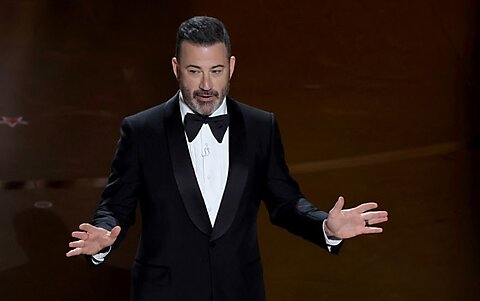
On April 28, the Federal Communications Commission (FCC) announced an unprecedented review of ABC-Disney’s broadcast licenses. While the stated reason for the review accuses ABC of illegal discrimination, sources say that recent statements by Jimmy Kimmel calling Melania Trump an “expectant widow” drove the announcement of this review.
When paired with past frustrations with Jimmy Kimmel and recent demands by President Trump and the First Lady, it is pretty clear that this review is politically motivated. And rather than just threats or investigations, this review directly puts ABC broadcast licenses at risk. This action by the FCC is a dangerous escalation that makes clear the need to fundamentally change the FCC’s authority to protect free expression.
A Pattern of FCC Abuse
FCC Commissioner Brendan Carr has frequently used his authority to threaten news organizations for speech disliked by the Trump administration. At the very start of the administration, the FCC investigated CBS’s 60 Minutes for news distortion, alleging CBS favorably edited an interview with Kamala Harris in order to protect her campaign during the 2024 election.
Following the horrific murder of Charlie Kirk, Jimmy Kimmel made an unclear joke that seemed to imply that the murderer was a MAGA supporter. Even as various ABC affiliates were expressing their frustration with Kimmel’s comments, Carr demanded that ABC take action against Kimmel, saying, “We can do this the easy way or the hard way.” Kimmel was suspended for a short time before being put back on the air.
And more recently, during the conflict in Iran, President Trump was frustrated by what he viewed as inaccurate or incomplete reporting by news organizations in the fog of war. Chairman Carr warned broadcasters “to correct course” on potential news distortions or hoaxes before their license renewals come up. Making the threat clear, Carr stated that “Broadcasters must operate in the public interest, and they will lose their licenses if they do not.”
Of course, previous administrations have abused this power as well. During the Biden administration, a news distortion complaint against FOX was left open by the FCC for over a year. The Obama administration extracted various concessions during mergers. And the Fairness Doctrine was used by various administrations to require broadcasters to adhere to whatever the government of the day viewed as “fair” until stopped by President Reagan.
But the revival and expansive use of the FCC’s regulation of content raise serious questions about why the FCC is even allowed to police speech.
Bad Jurisprudence Opened the Door
Unfortunately, the FCC has exercised broad powers over broadcast speech because of decades-old Supreme Court rulings. The New Deal court in the 1943 NBC v. United States blessed the FCC’s extremely broad powers. Citing “public interest, convenience, or necessity” standards, the court found that the law “puts upon the Commission the burden of determining the composition of that traffic.”
In 1969, the Supreme Court continued this precedent in Red Lion Broadcasting Co. V. FCC, upholding the fairness doctrine as a valid exercise of the FCC’s authority to regulate in the public interest given the “scarcity of broadcast frequencies.” In so doing, the court found that the FCC could require broadcasters to air various perspectives, essentially controlling the speech and editorial decisions of broadcasters.
This power over broadcasters has created what my colleague Brent Skorup calls “junior varsity” First Amendment rights for broadcasters. Skorup and I have argued that the public interest standard and its various rules, such as the “news distortion rule,” are “hopelessly subjective and liable to abuse for political ends.”
As Chairman Carr continues to prove our point, the courts should revisit these flawed decisions, especially in light of the vast new ecosystem of media that people have access to. It is impossible to argue that there is a scarcity of media available to Americans today. Even the existing statutes governing the FCC should forbid this, with 47 U.S.C. § 326 clearly stating that nothing gives “the Commission the power of censorship” and “no regulation or condition shall be promulgated or fixed by the Commission which shall interfere with the right of free speech.”
It is wrong, unlawful, and unconstitutional to trample on the expressive rights of Americans and grant the government the power to interfere in their expression. We don’t accept this when it comes to the speech rights of other Americans or other forms of media—we shouldn’t accept it for broadcast media.
Stopping Major Censorship Requires Major Reforms
Punishing a media organization, no matter what one thinks of their reporting or programming, is an affront to the right of Americans to speak and listen to whatever speech they wish. To be clear, the media will often get things wrong and will be biased. Entertainment may be unfunny and offensive. But the promise of the First Amendment is that we leave it to Americans to figure out what is good and true. You can find the jokes to be extremely distasteful, the reporting to be misleading or false, and the editorializing to be hopelessly biased— and still believe that Americans have a right to hear that speech, discuss it, praise it, or condemn it.
And this doesn’t matter what your politics are and what the government of the day is. While many Democrats are correctly criticizing these actions by the FCC, even Senator Cruz, Chairman of the Senate Commerce Committee, condemned the move, saying clearly that “It is not the government’s job to censor speech, and I do not believe the FCC should operate as the speech police.”
Regardless of whether the courts act to rectify their mistakes, it is past time for Congress to strip the FCC of its censorial powers.