












Thomas A. Berry, Dan Greenberg, and Harrison Prestwich
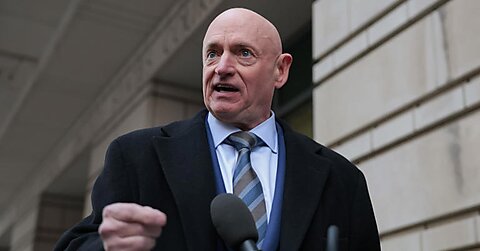
Mark Kelly is both a sitting US senator from Arizona and a retired US Navy captain. In late 2025, Senator Kelly made several public statements criticizing the Trump administration’s military policy. For instance, he appeared in a video addressed to service members, in which he was joined by other federal legislators, saying, “Our laws are clear. You can refuse illegal orders.”
The Department of Defense (“DoD”) announced shortly thereafter that Kelly would be placed under review for “serious allegations of misconduct.” The DoD informed him that he was potentially subject to a reduction in retirement pay, a reduction in rank, and recall to active-duty service. Furthermore, Secretary of Defense Pete Hegseth stated that Senator Kelly could face “criminal prosecution” for his comments.
On January 12, 2026, Senator Kelly filed suit alleging a violation of his First Amendment rights. He also asked the district court for a preliminary injunction that would halt the DoD’s retirement review. The district court found that Senator Kelly was likely to succeed on the merits of his First Amendment claim and granted the injunction. The government appealed, and Cato filed an amicus brief in support of Senator Kelly in the DC Circuit. Tomorrow, that appellate court will hear oral arguments in the case.
Our brief first explains why the DoD cannot constitutionally revoke Senator Kelly’s military benefits as punishment for his political comments. Such retaliation violates the doctrine of unconstitutional conditions, a doctrine that prevents the government from punishing speech by withholding government privileges. In this case, the government attempted to frame its speech restrictions as part of an “exchange” between retirees and the military. But that characterization obscures a fundamental constitutional problem: in effect, the government is attempting to impose a monetary penalty on the exercise of First Amendment rights. If the government prevails, it will do more than just censor Senator Kelly. It will force millions of retired service members, many of whom live under financial strain, to choose between their continuing benefits and their First Amendment rights.
Our brief also argues that military retirees like Senator Kelly neither forfeit their First Amendment protections nor their right to judicial review of potential First Amendment violations. The government argues that it alone should be allowed to determine which speech by military retirees receives protection and which is out of bounds. In the government’s view, Senator Kelly implicitly urged disobedience of lawful orders, and the government asks the courts to defer to that view. But courts are not meant to yield to the executive branch on such constitutional questions. Rather, courts must enforce workable, replicable standards based on their own independent judgment of the facts. This ensures that, wherever the line between protected and unprotected speech lies, the government cannot cross it by mischaracterizing the nature of the speech at issue. Deferring to the executive mangles and diminishes the role of the judiciary in our constitutional system of checks and balances.
The Secretary of Defense cannot be the lone arbiter of whether Senator Kelly’s—or any military retiree’s—speech receives First Amendment protection. The DC Circuit should affirm the injunction.