










Tad DeHaven
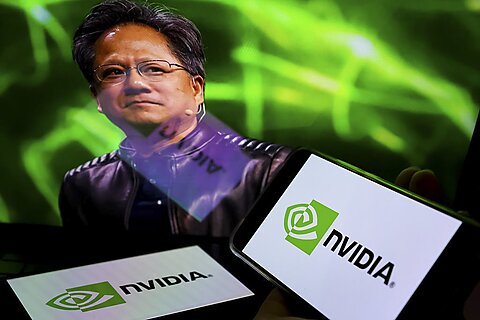
On November 12, President Trump said there was “only one man” to replace Jensen Huang at Nvidia. He meant former Apple CEO Tim Cook. Eleven days later, Nvidia announced Huang’s reinstatement, and Trump told CNBC, “I made the deal.”
Why was that the president’s deal to make?
Huang resigned after acknowledging an affair with a woman suspected of ties to Chinese intelligence. Two Nvidia shareholders urged the board to keep an open mind about bringing him back. An Nvidia employee set up a website where people could sign a letter calling for his return. Shareholders and employees had every right to make their case to the directors, who had told investors on November 17 that they had no intention of reinstating Huang.
Nvidia’s board also had good reason to ask federal officials what they knew about the suspected intelligence operation. The government’s answer eased their national security concerns, according to the board’s statement. They also met with Huang and said they were satisfied that he could lead the company, though their own investigation remains open.
But Trump crossed the line by pressuring them to reinstate Huang. Any director who still thought it was a mistake to bring back Huang was forced to weigh what it might cost Nvidia to defy the president. That makes it fair to wonder whether Nvidia’s board was truly kosher with reinstating Huang. What happens if the board’s internal investigation turns up more troubling information involving Huang? Will it be reluctant to act against a CEO whose reinstatement Trump declared essential to American prosperity?
When CNBC’s Sara Eisen asked Trump where he drew the line, he replied, “I’m doing it for the country.” In Trump’s telling, American prosperity depends on having Huang at the helm of Nvidia. Little wonder that Jim Cramer asked on the same call whether Washington would come to the company’s aid if it got into financial trouble. Trump said he didn’t think it would come to that, but here he was fielding a bailout question about a company that earned $65.3 billion last quarter.
We’ve seen what happens to a board when Washington decides a company is too important to fail. In 2009, while General Motors depended on a federal bailout to stay afloat, the Obama administration ousted CEO Rick Wagoner and appointed his successor, Fritz Henderson. Henderson later told investigators that GM’s directors felt Treasury had usurped their authority to choose the CEO.
The administration already has enough say over Nvidia’s business to claim a cut of certain chip sales to China. And the next time Trump asks Huang for a favor, he can remind him who helped get him his job back. As my colleague Scott Lincicome pointed out today, the economic costs of this kind of interference are harder to see than Monday’s jump in Nvidia’s share price.
Take Intel. In August 2025, Trump called on CEO Lip-Bu Tan to resign over Tan’s ties to China. Tan scurried to the White House, where Trump says he told him, “If you’re smart, give the United States of America 10 percent of your company.” Tan kept his job, and the federal government became an Intel shareholder.
That same month, Tim Cook went to the White House seeking a tariff exemption for Apple. As Scott has documented, Trump and Commerce Secretary Howard Lutnick reportedly pressed Cook to have Intel make some of Apple’s chips. Apple got its exemption. Ten months later, Trump took credit for what he described as a deal between Apple and Intel.
“We want capital flowing to companies for commercial reasons,” Scott told the New York Times. Good luck with that when the president is out recruiting customers for a company in the federal portfolio.
“Investors have grown accustomed to President Trump influencing the prospects of different companies, whether it’s rare earth metals, energy, and chips,” JoAnne Feeney, a portfolio manager at Advisors Capital Management, told Bloomberg. “It certainly has made investing more complicated because it has to be factored into which stocks you choose to hold. It’s not the way the US capitalistic system is designed.”
No, it’s not.
Huang is due to testify before the Senate Banking Committee on December 3 about chip exports. Congress is already asking the administration which officials weighed in with Nvidia’s board and what they said to get Huang reinstated.
But Congress ought to keep Nvidia in mind as it considers the Senate’s defense authorization bill. Section 1051 would let the Pentagon’s Office of Strategic Capital buy stakes in suppliers of critical minerals and other materials while barring its director from taking a board seat or obtaining other voting representation. Trump didn’t need a seat on Nvidia’s board to get its directors on the phone. Now imagine taking that call when the federal government is also one of your largest shareholders.