













Stephen Slivinski
Yesterday, the President’s Council of Economic Advisers issued its annual Economic Report of the President. Like every year, it’s a wide-ranging analysis of several hot-button economic topics.
While I can’t speak to the reliability of the analysis in every chapter, one thing that stands out is the chapter on housing supply. Like any policy document written by committee and expected to rationalize even the least justifiable policies of an administration, it doesn’t get everything right. Yet it doesn’t get everything wrong either.
What It Gets Wrong
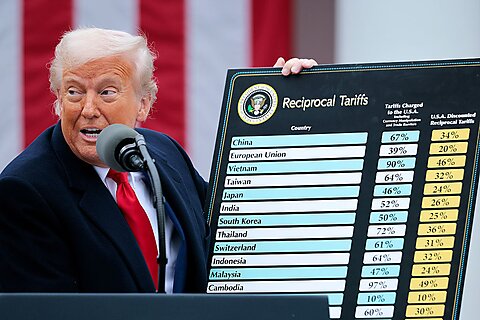
It completely ignores the tariff cost of housing construction materials. This is a big one, and it definitely gives off pay-no-attention-to-that-man-behind-the-curtain vibes. Tariffs—not just President Trump’s new ones, but existing ones too—on imported steel, lumber, gypsum, and a variety of other materials used to build houses, including the appliances that go inside, greatly impact the cost of a new home or even refurbishing an old one.
Estimates from the National Association of Home Builders (NAHB) indicate that the cost of building materials has increased by 34 percent since December 2020. The recent tariff actions alone raised the cost of construction for the homebuilders the NAHB surveyed by an average of $10,900. Yet nary a mention of that as a contributor to housing cost increases in the Report.
It demonizes institutional investors. Despite acknowledging they make up a small share of the overall residential housing market, the Report still claims that their “deep pockets” are enough to drive out homebuyers. Yet this ignores substantial empirical evidence that institutional investors do more harm than good in housing markets where they operate, especially when you expand the definition of housing to rental options. Perhaps this is not surprising, though: the Report repeatedly implies that homeowning is always preferable to renting. Policymakers at all levels have been second-guessing people’s preferences on housing for decades, and it’s beginning to seem like it’s all really just an extended viral ad campaign to accompany a future reissue of F.A. Hayek’s The Fatal Conceit.
It simply asserts that homes are more costly due to the “adverse demand” of illegal immigrants buying up homes without laying out any evidence. The CEA estimates this “government-enabled demand that unfairly competes with American families” and that it explains “nearly half” of the increase in home prices across 227 urban areas. I can’t tell you how they arrived at this number. The estimate is tacked on to the end of the paragraph, and there is no published data used to create the estimate. No methodology is described anywhere either. And no empirical backing from outside peer-reviewed sources is ever cited. The first two omissions alone would get you rejected by an economic journal editorial board, assuming such analysis got that far in the first place. Yet the Report authors intend for this “adverse demand” to strike the reader as a significant contributor to house price increases.
What it Gets Right
Luckily, the proposed cure is as good as the just-described diagnosis is bad.
It bases this cure on the actual driver of price increases: government regulations at all levels. Thankfully, the Report, to its credit, devotes more than 10 pages to this versus the one page devoted to the boogeymen of immigrants and institutional investors.
Federal environmental mandates, local housing restrictions, slow permitting, and high fees are all real culprits of housing price increases identified in the Report. The costs of these combined form what the Report cleverly terms the “bureaucrat tax,” estimated at over $100,000 built into the price of a new home. (And yes, this time there’s a comprehensive and coherent methodology for how they arrived at that estimate.)
The proposals put forward to remedy those problems—striking down all manner of government-imposed restrictions on supply at all levels are very similar to those that were the subject of President Trump’s Executive Order issued on March 13. Analysis of that can be found here. (Not to mention very similar to what I propose in Cato’s forthcoming handbook on affordability. Stay tuned.)
So, on average, the Report’s discussion of housing supply and affordability eventually gets things mostly right. It’s just a shame the authors allowed an otherwise clear message to be muddied by other far less defensible arguments.