













Walter Olson
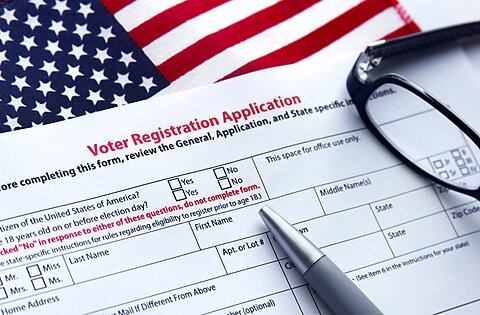
My colleague Stephen Richer has already weighed in with observations on the New Jersey voter registration fiasco, in which a software error mistakenly registered roughly 6,600 persons to vote between June 12, 2023, and June 25, 2024, even though they had affirmed they were not US citizens. Of these, somewhat fewer than 400 later voted.
So far as I am aware, this is by far the biggest instance of unlawful noncitizen voting in the US unearthed in the past generation, so it may matter that it seems to be widely agreed that the mistaken registration did not result from intentional misconduct by the persons added to the rolls, the state, or its software vendor. Damningly, however, when the error was found and the software fixed, the state “never notified affected residents or removed their names from the rolls,” according to the NYT account. Incoming Gov. Mikie Sherrill at a press conference called this “unacceptable.” That’s for sure.
To get another issue on the table, motor-voter—using residents’ DMV interactions either to offer them the chance to register to vote or, as in New Jersey’s case, to affirmatively register them unless they choose to opt out—has been prone to harmful glitches since its introduction. In a 2024 preview of the New Jersey debacle, an Oregon investigation found 1,617 improper registrations, with “human error and a poorly designed computer program” blamed, of which officials say ten persons went on to vote. At the same time, other glitches may work to impede legitimately eligible voters from timely and accurate registration in a manner that increases their likelihood of running into paperwork hassles when they try to vote.
Both the ballot-integrity and voter-discouragement issues are part of wider problems, chronic in some states, with outdated and inaccurate voter rolls. Critics warned from the start and have continued to warn that motor-voter in particular tends to turn over sensitive matters of intake design, data entry, and data transfer to state agencies whose expertise and mission are unrelated to elections. (Twenty-five years ago, Cato Senior Fellow John Samples was testifying about these problems to Congress.)
One possible conclusion is that Congress should consider backing the federal government away from its current explicit promotion of motor-voter, which might not really fit with its constitutional responsibilities anyway. More modestly, we should at least take the hint that the unglamorous details of implementation matter greatly, even if they get lost in the rival claims over who is a better friend to democracy. My own view is that not only are major changes to election systems best phased in over time, but they also tend to work best when seasoned election administrators can take prominent responsibility for their design, debugging, and maintenance. That might be needed advice for backers of the Trump-backed SAVE America Act—now mercifully shelved for the year, it seems—which would have imposed drastic changes over a period of months in an environment in which all sorts of data problems were likely to emerge.