











Clark Packard and Chad Smitson
Later this week, the House of Representatives will likely vote on the Lindsey O. Graham Sanctioning Russia and Iran Act of 2026, which cleared the Senate 86–11 in August. The bill’s tariff chapter grants the president more authority to impose import taxes on products Americans buy from countries that purchase certain Russian energy products. It is strange to do this less than two months before an election in which prices are a dominant issue.
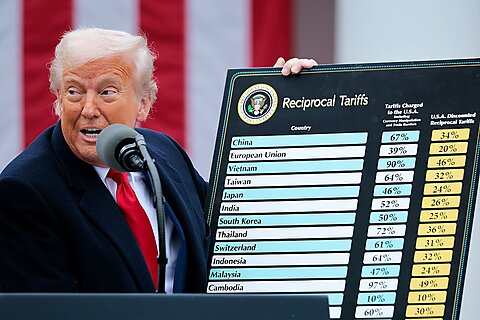
Start with the policy. Congress doesn’t need to guess what President Trump will do with delegated tariff powers. Under Section 232 of the Trade Expansion Act of 1962, the Trump administration has declared imported upholstered furniture, kitchen cabinets, and bathroom vanities as threats to US national security. The Commerce Department has added refrigerators, washing machines, and air conditioners to its list of steel derivative imports that allegedly threaten national security, and last month it proposed adding trumpets, tubas, and trombones. In July, the president threatened tariffs on imports from Canada over wildfire smoke.
When the Supreme Court closed off tariffs under the International Emergency Economic Powers Act in February, the administration declared a bogus balance-of-payments emergency under Section 122 of the Trade Act of 1974 to impose tariffs, and when those temporary authorities expired in July, it immediately declared that over 60 countries tolerate forced labor and imposed new tariffs. The Russia sanction bill is loose enough that it could join that list. It does not say which data determine the top five buyers of certain Russian energy products. Perhaps more importantly, the legislation does not establish a mechanism for Congress to approve or reject specific tariffs the president wants to impose.
Now to politics. Tariffs are the centerpiece of President Trump’s economic agenda, but they are deeply unpopular with the American people. A July YouGov survey found that 72 percent of Americans say tariffs raised the prices they pay, including 46 percent who say prices rose a lot. As Reason’s J.D. Tuccille noted in late July, a Harris poll for The Guardian earlier this year found cross-party agreement that tariffs increased the prices for goods they purchase. Seventy-seven percent of Democrats, 67 percent of independents, and a staggering 64 percent of Republicans agreed that tariffs increased prices. Pew found in April that 63 percent of Americans have little to no confidence in President Trump’s handling of tariff policy. A new CBS News survey finds most voters prefer congressional candidates who oppose more tariffs.
Voters are not imagining the price increases. Economists at the Federal Reserve Bank of Minneapolis reported this month that tariff pass-throughs into consumer prices have arrived and are increasing.
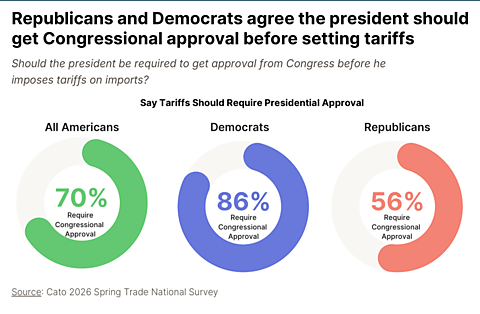
Voters also have a view on who should make tariff decisions. According to a new Cato Institute survey, seventy percent say the president should have to get congressional approval before imposing new tariffs, including 56 percent of Republicans, 54 percent of Trump’s 2024 voters, and 69 percent of independents. Asked in January, before the Supreme Court ruled, 63 percent told Marquette Law School pollsters that the Court should uphold the limits a lower court placed on the president’s tariff authority—including nearly a quarter of the people who think tariffs help the economy.
Tariffs are unpopular, and voters clearly support constraining President Trump’s authority to impose more. The question before the House in the coming days is whether it should hand a president who has already stretched every tariff statute he could find one more—weeks before an election in which voters have told virtually every pollster who asked that the tariffs have raised prices and harmed the economy.