










Walter Olson
How will America’s distinctive body of defamation law shape what we hear about the forthcoming election? Will we all be subjected to another firehose of stolen-election lies because the New York Times v. Sullivan doctrine, as one Supreme Court Justice has claimed, generates “an ironclad subsidy for the publication of falsehoods by means and on a scale previously unimaginable”? (I try to straighten out some election untruths in a new Cato podcast.) Or, conversely, does Sullivan leave even big media organizations so legally exposed that even flimsy lawsuits and threats can inhibit their investigations and reporting? (Plenty of dubious suits keep getting filed.)
Or maybe both? One of the paradoxes of US defamation law—which combines Sullivan’s relatively press-friendly “actual malice” standard with a lack of the loser-pays principle found in many other countries—is that it simultaneously puts coercive leverage in the hands of those who want to bully writers and speakers even as it leaves many defamed parties with no practical legal recourse.
Another of the paradoxes of defamation here is that while “opening up” libel law to more and bigger verdicts has come to be seen as right-coded, the biggest recent verdicts and settlements over allegedly defamatory political speech have tended to be levied against right-wing speakers, from Alex Jones to Rudolph Giuliani, as well as others involved in spreading falsehoods about the 2020 election.
Chief among these was the $787 million settlement Fox News agreed to pay voting equipment maker Dominion over untruths spread on the shows of hosts like Maria Bartiromo and Lou Dobbs. Dominion also sued other media defendants with success, as did another voting equipment company, SmartMatic,
Now Ian Rosenberg, a media lawyer who has represented ABC and other large media firms, has written a book (NYU Press) recounting the Dominion v. Fox dispute from start to finish. Its title, Terrible Stuff Damaging Everybody, quotes Rupert Murdoch himself in a message to a subordinate concerning public harangues by frequent Fox guest Giuliani.
I noted at the time that the facts of the case as disclosed in litigation were extremely bad for Fox: a long roster of anchors, executives, and other decision makers deemed the election-fraud claims the network was airing “dangerously insane,” “this B.S.,” “really crazy stuff,” and so on. (More in this Cato podcast.) As Rosenberg shows, the network overcame its internal doubts in large part because it feared losing viewers to other outlets that were less inhibited about airing fantastic election-theft claims.
Aside from the detailed narrative of the courtroom battling, I appreciated that when Rosenberg reaches the policy implications, he generously cites my writing in this space about one of the lessons of the settlement: namely, that while Sullivan may be speech-protective, it did not then and does not now eviscerate [the ability] to sue for defamation. That should take the wind out of demands to weaken the “actual malice” rule on the grounds that when it is applied, public figures just can’t win.
Rosenberg praises the handling of the case by Delaware Superior Court judge Eric M. Davis and contends that the law “worked” in the sense that Fox has become more careful and more professional.
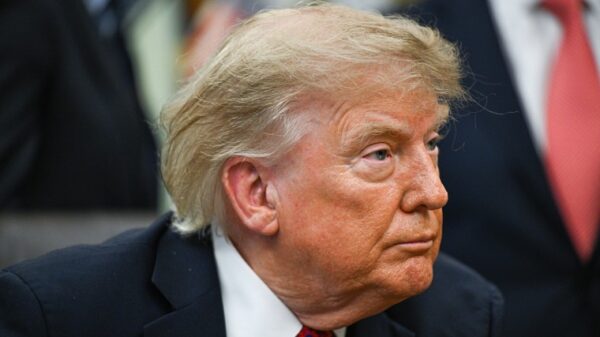
Of course, not everyone welcomes the peacemaking embodied in a legal settlement. President Donald Trump, for example, aimed one of his spite orders at Susman Godfrey, which represented Dominion in the action, purporting, among other things, to restrict its lawyers from entering federal buildings. It should surprise no one that Trump’s oft-voiced support for the right to sue for libel extends only to his allies and not to his opponents.