













Matthew Cavedon
Dr. Frank Parasmo is an 80-year-old physician who practiced in New York for decades. A federal jury convicted him of unlawfully distributing controlled substances based on his prescription of opioids to patients experiencing chronic pain. The case was close. Unlike in many other cases, Dr. Parasmo was able to put forward extensive evidence that his practice was not a so-called “pill mill.” As a dissenting judge later noted, Dr. Parasmo “ordered numerous tests, referred his patients to a wide variety of specialists to treat their pain inducing conditions, tried to wean them off the controlled substances, and looked for alternative treatments to control his patients’ pain, including prescribing medications other than a controlled substance—all behaviors suggestive of a good faith effort to help his patients.” But over Dr. Parasmo’s objection, the jury was instructed that his intent turned on whether he “was (objectively) ‘acting reasonably’” rather than whether he subjectively intended to overprescribe. Applying that objective standard, the jury issued a split verdict, convicting him on some counts while acquitting him on others.
Following the trial, the Supreme Court held in another case that a conviction requires proof that the defendant subjectively knew he was acting in an unauthorized manner. On appeal, the Second Circuit acknowledged that the district court’s intent instruction was wrong but, in a divided decision, deemed the error harmless. It reached that conclusion by reviewing the government’s evidence presented at trial and determining that it “overwhelmingly” supported a finding of subjective intent. But as Judge Robinson explained in her dissent, that was not the appropriate inquiry. The panel should have instead looked to the “ample evidence” the defense put forward and asked whether a “jury could have concluded” that Dr. Parasmo lacked the requisite intent.
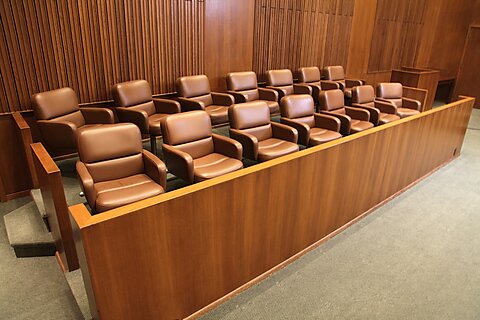
Cato joined an amicus brief filed by the National Legal Aid & Defender Association, Due Process Institute, and National Association of Criminal Defense Lawyers asking the Supreme Court to take Dr. Parasmo’s case and reverse the Second Circuit’s decision. In the words of Judge Robinson, the erroneous jury instruction—and the Second Circuit’s finding of harmless error—“took the central contested factual issue … away from the jury.” This is exactly what the Constitution prohibits in guaranteeing those accused of a crime a trial by jury. Where the defendant contested an element of the accusation against him and a juror could rationally conclude that the prosecution had failed to meet its burden on that element, incorrect jury instruction is not harmless error that can be excused by judges.