












Scott Lincicome
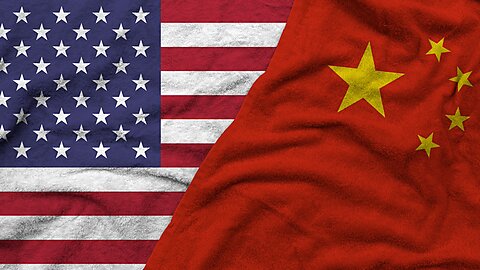
Many stalwart defenders of President Trump’s tariffs cite China as the primary motivation for the import taxes. Yes, so the theory goes, the tariffs impose economic costs, but they are a small and necessary price to pay for de-risking—or even decoupling—the US and Chinese economies to reduce American vulnerabilities to future coercion (or worse) by Beijing. As others and I at Cato have patiently explained, there have long been reasons to question this view, including, but not limited to, the fact that the president’s tariffs and trade deals often advantage China over alternative suppliers like Vietnam or Mexico, or otherwise bring the two economies closer together rather than further apart.
A new article in the New York Times adds to this growing pile of skeptical evidence. In particular, it finds that the administration’s new tariffs under Section 301 of the Trade Act of 1974—which replaced his tariffs under Section 122 of the same law, which replaced his tariffs under the International Emergency Economic Powers Act (are you tired yet?)—actually leave China in a stronger trade position compared to much of the rest of the world, after factoring in not just tariffs but other production, transportation, and regulatory costs. The article offers a telling example of a flashlight supplier who, thanks to Trump’s new tariff regime, abandoned his initiative to build up manufacturing capability in Thailand, Vietnam, and Cambodia and shifted back to his old supplier in China. The article offers some topline data to show why this is likely no mere anecdote:
The overall U.S. weighted tariff rate on Chinese goods is slightly above 23 percent, according to an analysis by Guojin Securities, a Chinese financial firm. And for some products, the tariff rate for China is identical to the rate on exports from Southeast Asian countries, where many companies have moved their supply chains.
The Times calls this a “surprising” development, but at this point, it really shouldn’t be. Last November, I noted the same issue with Trump’s IEEPA tariffs: following his initial deal with Beijing, the resulting tariff framework had created near-parity between imports from China and other countries, further undermining the popular idea that China—as opposed to Trump’s deep and abiding public love of tariffs—has been driving the president’s protectionist policies. Figure 1 updates the data I pulled back in November and confirms the Times’ new analysis of the Section 301 tariffs:
Based on our review of Customs and Border Protection tariff classification rulings, other goods with near-tariff parity include wristwatches, sunglasses, artificial flowers, glassware, and vacuum flasks, as well as true zero-gap cases such as ceramics, candles, and the aforementioned flashlights.
For an administration supposedly hyper-focused on decoupling from China, its tariff policy is currently encouraging the opposite for many goods. At the same time, there’s also good evidence that Chinese imports blocked from the United States directly have still found their way here by being incorporated into other goods in third countries (or via less scrupulous methods). And a recent Reuters article notes the United States has been increasingly supplying Chinese factories with the fuel and materials they need to crank out the very manufactured goods the administration has tried to discourage.
As Clark Packard and I have written, a full decoupling of the US and Chinese economies is neither wise nor possible, but this concept undeniably motivates the administration’s public stance on trade. As the latest data show, however, this motivation is more rhetoric than reality.