









Benjamin Giltner
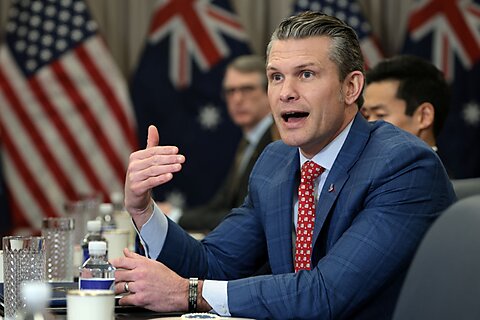
$37.5 billion. A huge sum of money for most people, but pocket change for the Pentagon. This is the amount that Secretary Hegseth, as he pleaded with the Senate to pass a $60 billion defense supplemental and a $1.15 trillion Pentagon budget, claimed that the Department of Defense has spent in its war with Iran. Hegseth defended these requests by stating, “This is a new request based on new realities of a world we face, stepping up to meet that moment.”
Yet, Hegseth’s $37.5 billion price tag obscures reality. None of Hegseth’s remarks checks out.
For starters, independent analysts report the war in Iran to have cost well over $100 billion. This amount likely underestimates the true costs of the war. Between the Pentagon classifying so many programs and private contractors underselling the total costs of the weapons they make, finding the exact cost of a military operation is difficult.
It’s for political reasons that Hegseth misled the Senate and the public on this war’s costs. The Trump administration has a greater chance at avoiding further erosion of public opinion towards this war if it undersells the war’s financial costs to Americans. Hegseth isn’t the first, nor the last, defense secretary to mislead the public about the costs of a military operation. Robert McNamara hid the total costs of the Vietnam War from the public and from members of Congress. Donald Rumsfeld alleged that the Iraq War would cost America under $50 billion, when it, in fact, has cost Americans over $1 trillion.
Even if Secretary Hegseth defied modern history and his $37.5 billion price tag proved true, there would be little need for Congress to approve an over-$1 trillion Pentagon budget for 2027, much less a $60 billion defense supplemental. It would seem that the Pentagon could make do with the funds it received from last year’s defense appropriation and from the over $150 billion in funds for defense in the One Big Beautiful Bill.
Deceiving the public about the financial costs grants public officials the ability to retain political capital, namely public opinion, on a project that requires a lot of money, especially one with no clear benefit to the public. This deception won’t go away anytime soon. It’s too politically effective and feasible.
But the public should be aware of these political maneuvers. Independent organizations and the public must continue to investigate and bring to light the actual costs of this war. Transparency in government, any semblance of it, is mandatory for a democratic government.