











Thomas A. Berry
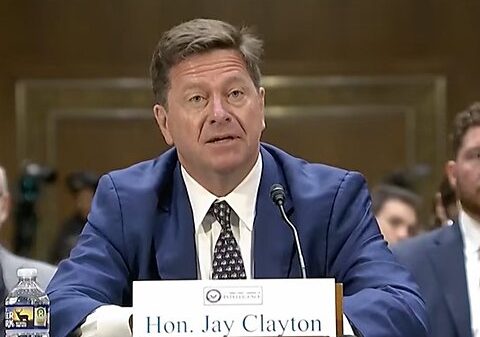
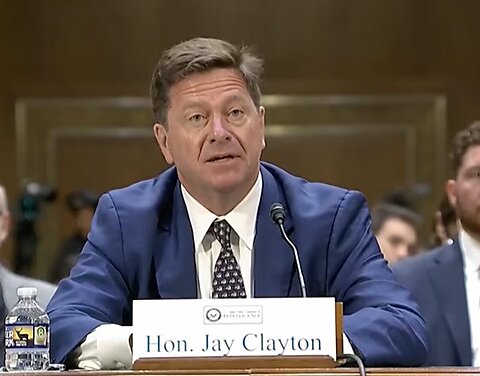
Last Tuesday (July 28), the Senate confirmed Jay Clayton to be the new director of national intelligence (DNI). Yet Clayton was not sworn in until today, with William Pulte continuing to purportedly serve as the acting director of national intelligence for all of last week. Bizarrely, both men attended the cabinet meeting on Friday at Camp David. But while the administration was within its rights to delay Clayton’s swearing in as long as it wished, it could not extend Pulte’s acting service. Under the plain language of the Federal Vacancies Reform Act, Pulte’s time limit as acting DNI expired the moment the Senate confirmed Clayton. Everything Pulte has done as acting DNI since that moment has been legally illegitimate and is vulnerable to a court challenge.
First, the basics of the Federal Vacancies Reform Act (FVRA). The FVRA allows the president to temporarily designate “acting officers” to immediately fill vacant offices that normally require Senate confirmation. But the FVRA places a time limit on acting service to incentivize the president to make a nomination for a permanent replacement. That is because acting officers are supposed to be only placeholders, not permanent solutions. Acting officers serve without having been confirmed by the Senate to the office in question, which means they have not received the vetting that Senate-confirmed officeholders receive. Although acting officers may be necessary to keep an office’s core functions running, their lack of vetting for the office they temporarily hold means their service should be no longer than necessary.
To that end, the FVRA gives the president a time limit of 210 days after a vacancy arises to make a nomination to the office. If the president fails to do so within 210 days, the acting officer’s time limit expires. But if the president does make a nomination in time, then the acting officer’s time limit continues “from the date of such nomination for the period that the nomination is pending in the Senate.” The reasoning behind this approach is that once the president has made a nomination, the ball is in the Senate’s court. If the Senate is slow to decide whether to confirm or reject a nominee, it might seem unfair to punish the executive branch for that slowness by allowing an acting officer’s tenure to expire while a nomination is still in limbo.
But the Senate did not act slowly in this case. Indeed, it was the administration that slowed Clayton’s confirmation process, demanding that Clayton not even show up to his first scheduled confirmation hearing in a blatant ploy to ensure that Pulte would have some time as the acting DNI. But eventually, Clayton did have his hearing, and he was confirmed in due course.
Under the Constitution, Clayton did not immediately become DNI the moment he was confirmed by the Senate. The Appointments Clause sets out a three-step process: The president “shall nominate, and by and with the Advice and Consent of the Senate, shall appoint” the officers of the executive branch. Thus, the first step is presidential nomination, the second step is Senate confirmation, and the third and final step is presidential appointment. Clayton could not take office until Trump took this third and final step.
But even though Trump could delay Clayton’s ascension to office as long as he wished, that does not mean Trump could also extend Pulte’s acting service as long as he wished. Here again is the relevant text of the FVRA’s time limit:
(a) … the person serving as an acting officer … may serve in the office—
for no longer than 210 days beginning on the date the vacancy occurs; or … once a first or second nomination for the office is submitted to the Senate, from the date of such nomination for the period that the nomination is pending in the Senate.Although there are provisions for additional service by the acting officer if a nomination fails, those provisions are not relevant here since Clayton was confirmed. Under the FVRA’s plain text, once Clayton’s “nomination for the office” was “submitted to the Senate,” Pulte’s time limit extended only “for the period that” Clayton’s nomination was “pending in the Senate.” And the moment Clayton was confirmed, Clayton’s nomination was no longer “pending in the Senate.”
We don’t yet know how the administration might justify Pulte’s continued acting service if it is challenged in court, but I can think of only two possible arguments. First, the administration could argue that even after a nomination has been made, the original time limit of “210 days beginning on the date the vacancy occurs” continues to provide an alternate, potentially longer authorization of acting service. Or, second, the administration could argue that a nomination remains “pending in the Senate” even after confirmation, until the nominee is actually appointed and sworn in. But neither argument is plausible.
First, the structure of the two subsections at issue makes clear that the 210-day time limit is superseded once the president makes a nomination. The text does not say that an acting officer may serve for 210 days or for the pendency of a nomination, whichever is longer. Rather, it says that the time limit tied to a nomination “pending in the Senate” becomes the sole operative time limit “once a first or second nomination for the office is submitted to the Senate.”
Although the understanding of a statute’s drafters is not dispositive, it is relevant that the Senate report for the FVRA shows that its time limit was understood to have this meaning. In the original draft of the FVRA, the time limit for making a nomination was 150 days (it was extended to 210 days in the final version). The Senate report explains that, “The 150 days is a maximum period, but an acting officer need not serve the full 150 days.” And one example the report gives of shorter service is “the obvious ending of service within 150 days if a nominee is confirmed in that time.” And just a page later, the report is even more explicit: If a “nominee is confirmed within 150 days of the nomination, the term of the acting officer ceases.”
The alternative argument, that Clayton’s nomination was somehow still “pending in the Senate” until he was sworn in, fares no better. The dictionary definition of “pending” is “not yet decided.” But the Senate had made its decision; it had no further action to take on Clayton’s nomination once he was confirmed. To be sure, Clayton was still pending appointment by the president last week, but he was no longer pending confirmation by the Senate. And it is the Senate’s action (or inaction) that matters, because a president can blame no one but himself for the delay in installing a confirmed nominee.
As the Senate report noted, “If the purpose of the Vacancies Act is to limit the President’s power to designate temporary officers, a position requiring Senate confirmation may not be held by a temporary appointment for as long as the President unilaterally decides.” But if the president could keep an acting officer in place for as long as he chooses by delaying a confirmed nominee’s appointment, then the FVRA would allow exactly that. An interpretation allowing such a tactic is thus exceedingly implausible.
And not only would this be an unnatural reading of the phrase “pending in the Senate,” it would also be a reading at odds with the executive branch’s own contemporaneous interpretation. Just five months after the FVRA became law, the Office of Legal Counsel in the Department of Justice issued a lengthy guidance on its application. And in explaining the FVRA’s time limit, OLC wrote that, “A nomination remains pending before the Senate until the nomination is confirmed, the nomination is withdrawn by the President, or the nomination is rejected or returned by the Senate.” Thus, OLC understood the key moment to be confirmation by the Senate, not any subsequent appointment by the president. Indeed, in that same guidance, OLC also explicitly described the time limit as tied to Senate action: “Once a nomination is submitted, the acting official may continue to serve until the Senate takes action on the nomination or the nomination is withdrawn.”
The plain text of the FVRA and its contemporaneous understanding by both the legislative and executive branches all point to the same conclusion: William Pulte’s authority to exercise the powers of the DNI ended the moment Jay Clayton was confirmed by the Senate. By continuing to act as if he had such authority for all of last week, Pulte has put any actions that he or the agency may have taken during that time in legal jeopardy. Any employees that Pulte purported to fire after Clayton’s confirmation would have a strong case in court that they were never lawfully terminated. In the long run, the administration may have only hurt itself with this unprecedented delay.