













Clark Neily
A federal district court ruled last week that key provisions of the National Firearms Act—including the registration scheme for so-called “silencers” (properly called suppressors), along with short-barreled rifles and short-barreled shotguns—are now unconstitutional. The reasoning is refreshingly simple.
The NFA was never anything but a tax law: Congress used its Article I taxing power in 1934 to impose steep “transfer and making taxes” on disfavored weapons, and the registration and application requirements existed only to help collect that tax. But in 2025, as part of the One Big Beautiful Bill Act, Congress zeroed out those taxes for most NFA firearms. A tax that raises no revenue isn’t a tax at all—and without a live tax to enforce, the regulatory scaffolding built around it has nothing left to stand on. As Judge James Wesley Hendrix put it in Silencer Shop Foundation v. ATF, the government cannot retroactively justify a statute under a power Congress never invoked, like the Commerce Clause, just because the power Congress did invoke stopped working.
This is only a district court decision, and it is currently stayed pending appeal. But it’s worth noting how rare this kind of ruling is. Federal courts almost never strike down an act of Congress for exceeding its enumerated powers—the doctrine has bite in theory but is nearly toothless in practice. (Emphasis on “nearly”: earlier this year, two federal appellate courts disagreed about the constitutionality of a federal law that bans home distilling of alcohol, with the Fifth Circuit, which covers Texas, Louisiana, and Mississippi, holding that Congress has no authority to regulate the purely local, non-commercial home production of spirits.)
One of the few times in living memory that the Supreme Court has struck down a federal law as exceeding Congress’s constitutionally enumerated powers was, fittingly, another gun case, United States v. Lopez (1995), in which the Court struck down the Gun-Free School Zones Act because possessing guns near schools does not “substantially affect” interstate commerce.
Notably, the correct result in these cases has nothing to do with whether keeping guns away from schools or banning certain categories of firearms and accessories constitutes good policy. The question is narrower and more fundamental: does the federal government have the authority to enact those laws, or are those matters left to the states by the Constitution?
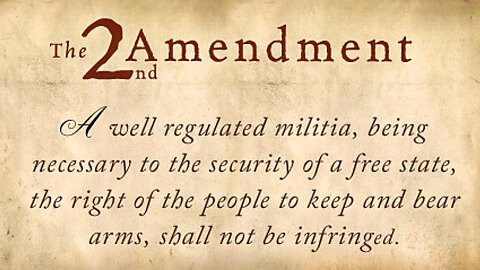
Last week’s Silencer Shop decision fits a broader pattern I flagged in a letter to the Washington Post regarding Virginia’s ban on AR-style rifles: the Supreme Court has made increasingly clear that it will no longer treat the Second Amendment as a second-class right. Last term alone produced two notable examples of that trend—one decision striking down a Hawaii law designed to frustrate the constitutionally protected right to carry a concealed weapon, and another reversing a criminal conviction for possessing a firearm while being an unlawful user of a controlled substance (in that case, cannabis).
Unlike Silencer Shop, neither of those decisions involved the enumerated-powers doctrine; they were Second Amendment cases straight up. But they reflect the same dynamic increasingly evident in gun cases: a properly engaged judiciary that is less willing to rubber-stamp firearms restrictions and increasingly inclined to ask hard questions about the source and limits of government power.