













Matthew Cavedon
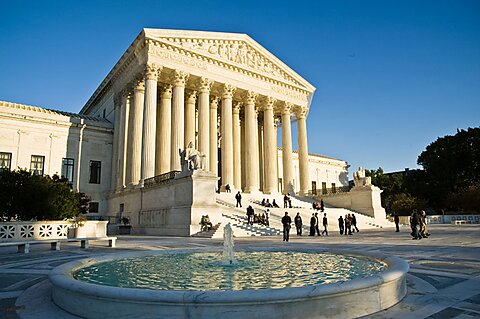
For the past 14 years, 83-year-old Ken Jouppi has been trying to prevent the State of Alaska from seizing his airplane. Mr. Jouppi is an Air Force veteran and has been flying charter planes in Alaska since the 1970s. Alaska has a number of villages and municipalities that are “dry,” where the sale, importation, and even possession of alcohol are illegal. Mr. Jouppi agreed to fly a customer to one of these locales. But the plane was stopped by police before takeoff—the passenger had packed alcohol in her luggage and carried three cases of Budweiser and Bud Light onboard to share with her husband on his birthday. Mr. Jouppi was convicted of a misdemeanor, sentenced to the minimum three days in jail, and ordered to pay a $1,500 fine. But Alaska also mandates forfeiture of any airplane used in connection with transporting alcohol to dry villages. Hence Mr. Jouppi has been fighting for the past decade and a half to save his $95,000 plane. The Supreme Court has agreed to hear his case.
Cato, joined by the Fines and Fees Justice Center, filed an amicus brief arguing that this forfeiture is an unconstitutional excessive fine. The Eighth Amendment was designed to prevent this kind of abuse. Long before the United States was founded, the common law protected people from extreme monetary penalties. The Framers understood the dangers of such abuse. But the Alaska Supreme Court’s view is that challenges to excessive fines “should rarely succeed.” This dismissive view led the court to conclude that there is nothing excessive about the forfeiture of an airplane worth “only 9.5 times the maximum fine”—and over 60 times the fine actually imposed.
When evaluating a punishment’s excessiveness, the common law accounted for the circumstances of both the conduct at issue and the defendant. From the Magna Carta through William Blackstone’s time, the “concept of proportionality was far broader than just that between the punishment and severity of the offense.” Early American courts agreed, holding that fines should be proportioned “to the offense committed, the situation, circumstances, and character of the offender.” Only ignoring this history allows courts to routinely impose excessive fines—as happened in this case. By focusing on “grave societal harms” rather than individual culpability, Alaska endorsed a fine that is undoubtedly excessive by common law standards.
Beyond the instant case, the Supreme Court should outline a clear standard for future cases. While the Court has heard a handful of excessive fines clause cases, only once has it analyzed excessiveness. On the other occasions, it has left this work to a lower court. The absence of a clear standard has resulted in varied—and often incorrect—multifactor tests that pay little attention to precedent or the original meaning of the excessive fines clause. This Court should take the present case as an opportunity to outline a clear, common-law standard.
Failing to do so would leave ordinary people at continued risk of government abuse. The Framers “were aware … of the abuses” that arise when a sovereign collects fines for improper ends. These injustices persist. Billions of dollars have been generated for governments through civil and criminal forfeitures. Because it is expensive and time-consuming for defendants to challenge forfeitures in court, successfully asserting Eighth Amendment rights is difficult—but it shouldn’t be.