












Jai Kedia
The Treasury Department has learned nothing from markets’ muted reactions to its bond price engineering schemes. Having doubled its long-end buybacks in August to at least $4 billion per operation, this week the Treasury unveiled a $6 billion operation in the 10- to 20-year sector, triple the normal size. Instead of lowering bond yields, as it was supposed to, the 10-year yield climbed to 4.85 percent, a three-year high, and the 30-year yield pushed back above 5.3 percent.
I wrote last month that unless the root causes of high yields are addressed, many of which originate in Washington, no amount of government financial engineering would help. Bond price manipulation cannot persuade markets to stop pricing government debt for excessive spending and inflation risks stemming from failed macroeconomic policies such as tariffs and the war in Iran.
And that’s what happened again, only faster than before. In August, yields dipped for at least a day before recovering. This time they rose straight through Treasury Secretary Scott Bessent’s announcement. Around $6 billion per operation is no better than $4 billion when weighed against a $31.5 trillion Treasury market, and the market is no longer pretending otherwise.
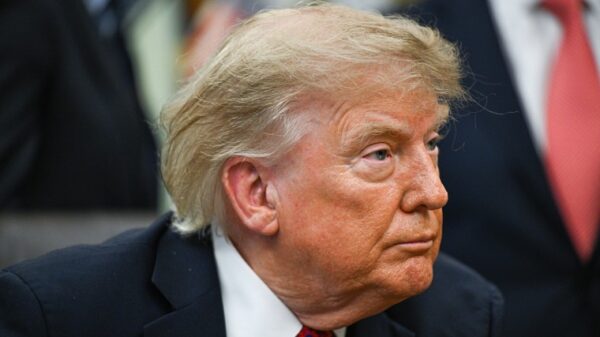
Instead of fixing the root causes, the administration keeps making the underlying problem worse. On September 9, President Trump pledged a $5,000 payment to every adult citizen if Republicans hold both chambers in November. The cost would run about $1.2 trillion, with an annual deficit near $1.8 trillion and a national debt approaching $40 trillion. As Marc Goldwein of the Committee for a Responsible Federal Budget put it, dividends are what firms pay out of a surplus, and the United States has no surplus to distribute. The same week, Trump also acknowledged that oil prices driven up by the war in Iran are unlikely to fall until after the midterms. Investors are being asked to lend their money for 10 to 30 years to a government that spends recklessly and doubles down on failed policies. No buyback operation can offset that.
Moreover, Bessent’s confidence does not match financial reality. Speaking at Southern Methodist University’s business school on September 9, he told traders: “I am the house now. And you can bet against me if you want.” Presumably, Bessent is claiming an information advantage over anyone trading against the Treasury and its desired outcomes.
While the line was primarily aimed at currency speculators following an unscheduled purchase of Japanese yen, this intervention and the bond buybacks are related. Japan is the largest foreign holder of US Treasuries, and sparing Tokyo the need to sell those holdings is another attempt to keep longer horizon yields down. (The theory is that if Japan must sell those Treasuries on the market, it’ll have to do so at lower prices, which means higher yields. So, the Treasury’s purchases should have kept yields down.) Yet yields have continued to rise, and the bond markets showed in real time what they thought of Bessent’s hubris.
Compare this with how the current Federal Reserve chairman describes the relationship between policymakers and markets. In his Jackson Hole keynote last month, Kevin Warsh argued that the Fed needs market signals “as unfiltered as possible” and listed among them the prices and trading volumes of Treasury securities. He warned against a regime in which market participants look primarily to the Fed for their next trade, describing a hall-of-mirrors problem: If markets take their cues from policymakers while policymakers read market prices, both are blinded to new information and policy errors become more likely. Market participants, on his account, should draw their own conclusions and form their own expectations. Warsh has matched that view with welcome changes at the Fed, dropping the forward guidance language that told markets what to expect, declining to submit his own forecasts for the Summary of Economic Projections, and appointing a task force to review the Fed’s communications.
On this narrow but important question, Warsh has it right and the Treasury has it wrong. The Fed chairman wants Treasury prices to arrive uncontaminated so policymakers can learn from them. The Treasury secretary is instead spending billions to contaminate them, all while signaling that he holds some serious sway over market prices. Warsh’s approach treats the yield as information, while Bessent’s treats it as a problem. The latter is wrong—blaming prices is the equivalent of blaming symptoms instead of the underlying disease.
Washington should not treat bond yields as something to manage. The long-term yield is a signal, and right now it is reporting that reckless government spending and elevated inflation fears are making long-dated government debt riskier to hold. The appropriate response is to fix those policies. Instead, the Treasury secretary is doubling down on the very tactic he criticized when the previous Treasury employed it, apparently convinced that he alone can wield government power correctly. He cannot. The market is “the house,” not the Treasury.