











Evan Sankey
The second Trump administration has indulged in the art of changing names. The Pentagon, the Kennedy Center, the tallest mountain in the US, and the body of water west of Florida and east of Mexico have all been objects of rebranding (or attempted rebranding). In a surprise announcement on June 16, the Pentagon’s largest geographic combatant command joined the list. According to the press release, the US Indo-Pacific Command, which has operational authority over US military forces from Hawaii west to India, has reverted to its original name, the US Pacific Command or “PACOM.”
This reverses the 2018 decision of the first Trump administration to tack on “Indo.” That revision was enthusiastically adopted first by the foreign policy community and then by the Biden administration as a proclamation linking US interests in the Western Pacific with its interests in the Indian Ocean. The Department of Defense says the reversion “honors the command’s deep historical roots” and “collective spirit.”
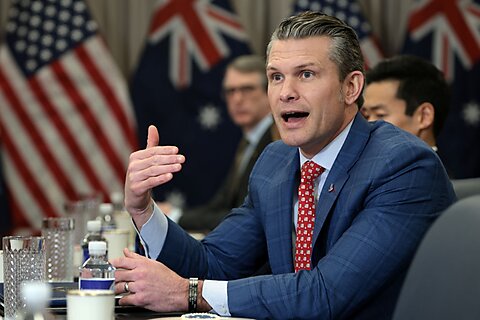
The change does not alter the geographic scope of the command, but the fact that it is a reversal suggests it has policy import. Under Secretary of Defense for Policy Elbridge Colby and his office, which almost certainly had a say in the decision, have worked to prioritize and discipline US defense policy toward the goal of sustaining a balance of power in Asia—particularly by denying a Chinese attack on the First Island Chain, which runs from Northern Japan to Taiwan to the Philippines. The 2026 National Defense Strategy defined this as America’s most important geographic objective short of preserving US dominance in the Western Hemisphere. Secretary of Defense Pete Hegseth dropped “Indo” from his May 2026 remarks to the Shangri-La Dialogue, saying “our approach in the Pacific centers on deterrence by denial along the First Island Chain.” Its formal deletion is a further bureaucratic and diplomatic manifestation of this focus.
It is also a welcome embrace of reality. The First Island Chain is the center of gravity for the US military presence west of Hawaii and the main defense perimeter of US interests across the Pacific Ocean. It contains two treaty allies, dozens of US bases, and roughly 55,000 US troops (three treaty allies and 80,000 troops if South Korea is included). By contrast, there is one US military base in the Indian Ocean—at Diego Garcia. The US has interests in the Indian Ocean and in cultivating closer ties with India, but these are peripheral to the stakes and challenges of our boots-on-the ground posture in the Western Pacific.
“Indo-Pacific” was a rhetorical and diplomatic aspiration. The phrase originated with the late Japanese Prime Minister Shinzo Abe, who meant for it to help diversify Japanese grand strategy. The thinking was that balancing China would be easier if India were part of Japan’s strategic neighborhood. Its adoption by the US government and the members of the Quadrilateral Security Dialogue (“the Quad” group of Japan, India, Australia, and the US) seemed to give it unstoppable cachet. But aspirations and geographic abstractions are also a route to potential mission creep. Eight years of “Indo-Pacific” did not will into being a decisive coupling of the Indian Ocean and Pacific theaters or meaningfully alter US strategic circumstances along China’s maritime frontier.
Those circumstances are imperiled, if not quite desperate. The US posture and base structure on and near the First Island Chain are a legacy of the early Cold War, when the US possessed a large conventional military advantage in the region and China had yet to field large arsenals of drones and theater ballistic missiles. Today, US forces in the Pacific are increasingly vulnerable, as are the security commitments they underpin. They are within range of at least hundreds of Chinese conventional missiles and in a conflict may become liabilities, as US bases in the Middle East have become in the Iran War. Efforts since the 2010s to improve the resilience of these forces through hardening and dispersion have not sufficiently moved the needle, so it is not surprising that an effort to “build, posture, and sustain a strong denial defense along the [First Island Chain]” is a core pillar of the 2026 National Defense Strategy.
Bringing back the Pacific Command does not magically remedy the vulnerability of our forward deployments. Rather, the change will help focus the minds of US and allied defense planners on the most urgent problem of our security role in Asia: how to sustain our regional military commitments without military dominance.